
Preserving Embryos Today, Planning Transfer When the Time Is Appropriate
Embryo freezing allows suitable embryos created during an IVF cycle to be cryopreserved for possible future use. A frozen embryo transfer, or FET, is the later process of preparing for and transferring a cryopreserved embryo according to the individual treatment plan.IVF may be considered when evaluation suggests it is an appropriate treatment option. At Khushi Fertility & IVF Centre, planning begins with understanding your medical history, fertility assessment and previous treatment, where relevant. Your doctor will discuss the proposed approach, what to expect and other options that may be appropriate.
THE CARE PRINCIPLE
Freezing an embryo and deciding when to transfer it are two different clinical decisions within the same fertility pathway.
Embryo Freezing and Frozen Embryo Transfer Are Connected, but They Are Not the Same Step
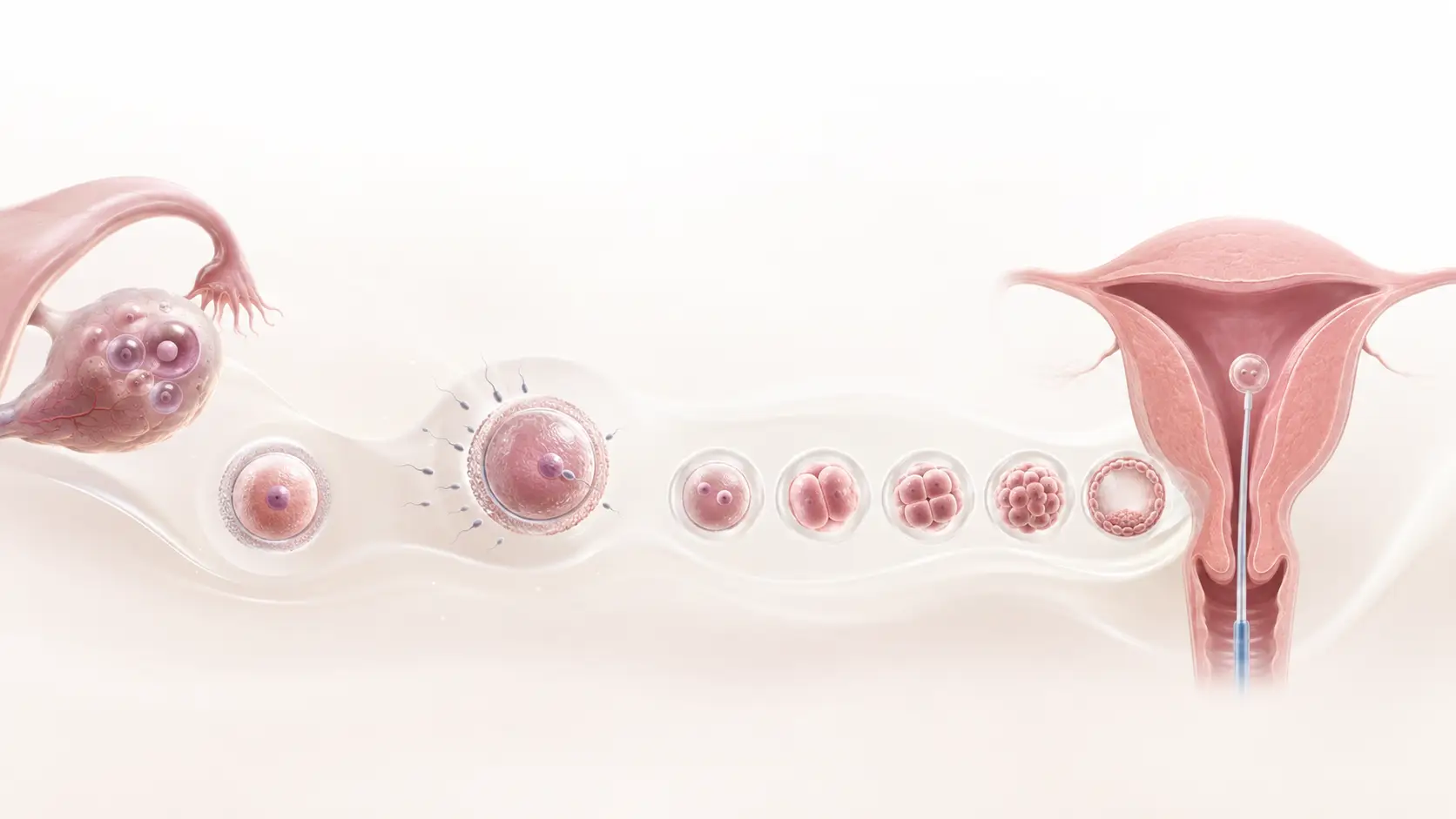
Embryo freezing takes place after embryos have been created in the IVF laboratory and suitable embryos are selected for cryopreservation. Frozen embryo transfer takes place later, when a cryopreserved embryo is prepared for transfer into the uterus as part of an individualised treatment plan.
The interval between freezing and transfer can vary. The timing of transfer depends on the clinical situation rather than on a fixed schedule for every patient.
Cryopreservation preserves an embryo for possible future use. It does not determine whether or when that embryo should be transferred.
When Might Embryo Freezing or a Frozen Embryo Transfer Be Part of Care?
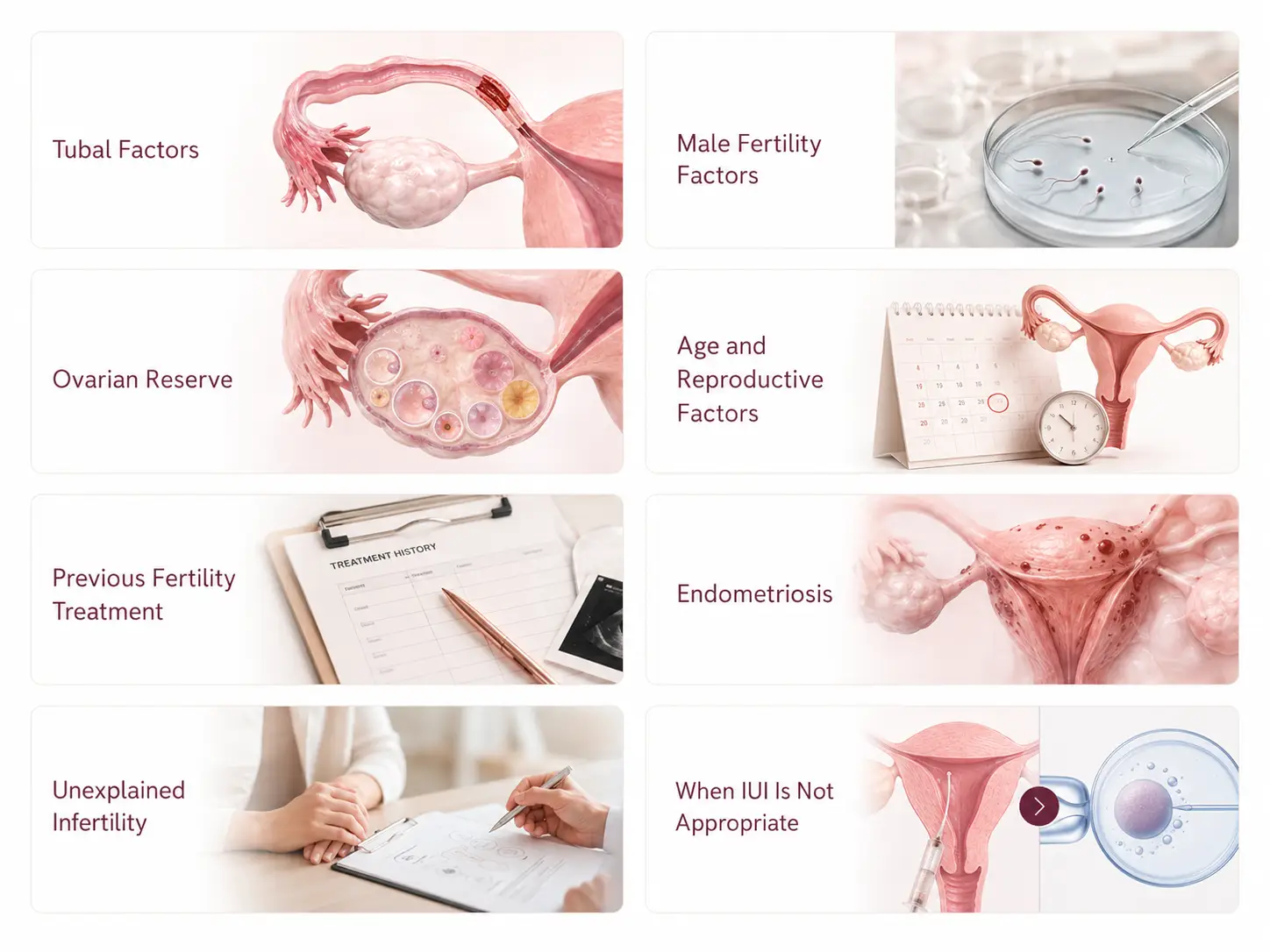
Embryo freezing and frozen embryo transfer may become relevant at different points in an IVF pathway. The reason depends on the embryos available, the clinical situation and whether transfer is planned now or for a later cycle.
Embryos Available After IVF
Suitable embryos remaining after an IVF cycle may be cryopreserved for possible future use.
Transfer Planned for Later
Embryos may be frozen when embryo transfer is intentionally planned for a later treatment cycle.
Clinical Reason to Postpone Transfer
Future Pregnancy Planning
Cryopreserved embryos may provide an option for a possible future pregnancy attempt when this forms part of the fertility plan.
Previous Frozen Embryos Available
Patients who already have cryopreserved embryos may return later to discuss whether and when a frozen embryo transfer should be planned.
Treatment Strategy
The decision to freeze embryos or proceed with a later transfer should reflect the overall IVF strategy rather than follow the same approach for every patient.
Embryology Considerations
The number, stage and laboratory assessment of available embryos are considered when discussing cryopreservation and future transfer planning.
Planning a Frozen Embryo Transfer Starts With More Than the Embryo Alone
Before a frozen embryo transfer is planned, the clinical team reviews the available embryo information together with the current uterine, menstrual, reproductive and medical context. The purpose is to decide whether transfer is appropriate and how the transfer cycle should be prepared.
01 — Embryo Records
The number, developmental stage and available laboratory information about cryopreserved embryos are reviewed before transfer planning.
02 — Uterine & Endometrial Assessment
Ultrasound or other assessment may be considered when clinically indicated to understand the uterine cavity and endometrial context before transfer.
03 — Menstrual & Hormonal Context
Cycle pattern and hormonal context may influence how the endometrium is prepared and how transfer timing is planned.
04 — Previous Transfer History
Previous embryo transfers, implantation history and pregnancy outcomes can provide important context for planning the next transfer.
05 — Current Medical Context
Current medicines, health conditions and relevant reproductive factors are reviewed because the clinical situation may have changed since the embryos were frozen.
06 — Previous IVF Treatment
The previous stimulation, fertilisation, embryo development and transfer history can help the team understand how the frozen embryos fit into the wider treatment pathway.
07 — Transfer Planning Discussion
The care team explains the proposed transfer approach, timing, monitoring and follow-up so that the patient understands the plan before proceeding.
From Embryo Freezing to Frozen Embryo Transfer
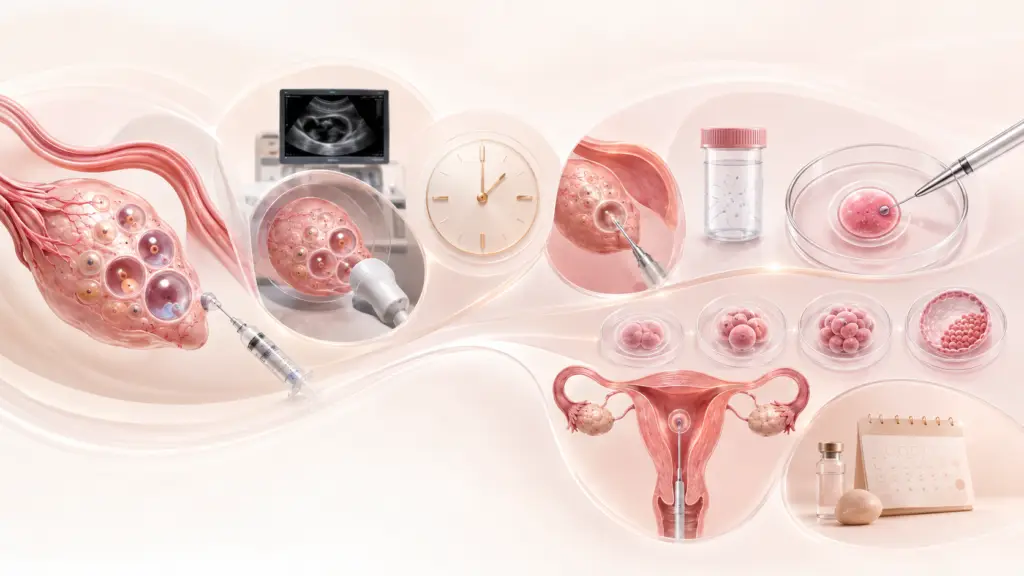
Embryo freezing and frozen embryo transfer form a connected pathway, but they occur at different stages. Embryos are first created, assessed and cryopreserved. If a future transfer is planned, the current clinical situation is reviewed before the embryo is prepared for transfer.
Embryo Creation
Embryos are created as part of an IVF or ICSI treatment cycle after eggs and sperm have been prepared and fertilisation has taken place.
Embryo Development
Following fertilisation, embryos are cultured in the IVF laboratory and their development is monitored over the appropriate period.
Embryo Assessment
The embryology team assesses embryo development using laboratory criteria to identify embryos that may be suitable for cryopreservation.
Cryopreservation
Suitable embryos selected for freezing are cryopreserved using the laboratory’s established freezing process for possible future use.
Storage
Cryopreserved embryos are stored under controlled laboratory conditions with identification, traceability and consent processes maintained according to applicable requirements.
Frozen Embryo Transfer Planning
When a future transfer is being considered, the care team reviews the available embryo records together with the patient’s current reproductive and medical context.
Endometrial Preparation
The transfer cycle is planned so that the endometrium and embryo transfer timing are appropriately coordinated according to the selected clinical approach.
Embryo Warming
Before the planned transfer, the selected cryopreserved embryo is warmed in the laboratory and assessed as part of the preparation process.
Embryo Transfer
The embryo is transferred into the uterus according to the individual treatment plan and the timing established for that cycle.
Follow-up
After transfer, medication and follow-up instructions are provided as appropriate, including when pregnancy testing should be performed.
The Laboratory Has an Important Role Before the Transfer Ever Takes Place
Embryo freezing, storage, identification, warming and preparation for transfer are laboratory processes that require structured embryology systems, careful traceability and appropriate quality controls.
The embryology team assesses embryos before cryopreservation, maintains controlled storage processes and prepares the selected embryo when a frozen embryo transfer is planned.
Laboratory processes support the treatment pathway, but they do not guarantee implantation or pregnancy.

Preparing for a Frozen Embryo Transfer Cycle
Preparation for a frozen embryo transfer depends on the individual transfer plan. Patients may need monitoring, medication instructions and timing guidance before the embryo transfer is scheduled.
Monitoring Appointments
Attend scans, blood tests or review appointments when advised so that the transfer cycle can be monitored appropriately.
Medication Instructions
Take medicines exactly as prescribed and confirm the timing if anything is unclear. Do not change or stop medication without speaking to the care team.
Transfer-Day Preparation
Follow the clinic’s instructions about arrival time, bladder preparation, food, medicines and any other steps needed before embryo transfer.
Work & Travel Planning
Discuss travel, work commitments or schedule limitations early if they may affect monitoring appointments or the planned transfer date.
Emotional & Practical Support
It is normal to have questions or uncertainty during a transfer cycle. Ask for clarification and involve a support person if that is helpful to you.
Changes or New Health Information
Tell the care team about new medicines, illness, unexpected bleeding or other health changes that occur during the transfer cycle.
What Embryo Freezing and FET Can — and Cannot — Tell Us
Embryo cryopreservation can preserve an option for future treatment, but every stage still involves biological and clinical uncertainty. Patients should understand what freezing and transfer can realistically offer before proceeding.
Freezing Does Not Guarantee Pregnancy
Cryopreserving an embryo preserves it for possible future use. It does not guarantee implantation, pregnancy or live birth.
Not Every Embryo Reaches Every Stage
Not every embryo created during IVF will necessarily be suitable for freezing, and an embryo’s response after warming is also part of the laboratory pathway.
Transfer Decisions Remain Individual
The timing and approach to frozen embryo transfer depend on the embryo information, uterine and endometrial context, previous treatment history and the current clinical situation.
A Thoughtful Approach to Embryo Freezing and Frozen Embryo Transfer
Embryo freezing and frozen embryo transfer involve both laboratory and clinical decisions. At Khushi, the pathway is planned by reviewing the embryo information together with the patient’s current fertility and reproductive context.
Evaluation Before Transfer
The current clinical picture is reviewed before deciding how and when a frozen embryo transfer should be planned.
Specialist-Led Planning
Transfer decisions are reviewed within a specialist fertility-care pathway rather than treated as an automatic next step.
Embryo Information Explained
Available embryo and previous treatment information is discussed in context so patients can understand what is relevant to the next step.
Connected Clinical & Laboratory Care
Clinical planning and embryology processes are coordinated across freezing, storage, warming and preparation for transfer.
Clear Consent & Communication
Patients should understand the proposed plan, relevant consent requirements and the practical steps involved before proceeding.
Whole-Person Fertility Care
Transfer planning considers the embryo together with uterine, menstrual, reproductive and relevant medical factors.
Related Fertility Pathways
Embryo freezing and frozen embryo transfer often connect with other parts of fertility care. These pathways can help patients understand the treatment, evaluation and laboratory context around a future transfer.
Fertility Evaluation
Understand the clinical factors that may influence treatment planning and the next step.
IVF
Explore how eggs, sperm, fertilisation and embryo development form the wider IVF treatment pathway.
IVF Laboratory & Embryology
Understand the laboratory processes involved in embryo culture, cryopreservation, storage and preparation for transfer.
ICSI
Learn when ICSI may be considered as part of fertilisation planning within an IVF cycle.
Egg Freezing
Explore fertility preservation using cryopreservation of unfertilised eggs rather than embryos.
PGT
Understand where preimplantation genetic testing may be discussed within selected IVF pathways.
Patient Journey
Common Questions About Embryo Freezing and Frozen Embryo Transfer
These questions explain the basic difference between embryo cryopreservation and a later frozen embryo transfer. Individual recommendations still depend on the embryo information, treatment history and current clinical situation.
What is embryo freezing?
Embryo freezing is the cryopreservation of suitable embryos created during fertility treatment so that they may potentially be used at a later time.
What is a frozen embryo transfer?
A frozen embryo transfer, or FET, is the transfer of a previously cryopreserved embryo after the transfer cycle has been clinically planned.
How long can embryos remain frozen?
Storage duration depends on applicable regulations, consent requirements and the individual treatment situation. The clinic should explain the relevant storage arrangements and documentation.
Does every frozen embryo survive warming?
Embryo warming is a laboratory step, and survival cannot be assumed for every embryo. The embryology team can explain the available embryo information and the laboratory process.
Does a frozen embryo transfer guarantee pregnancy?
No. Embryo transfer does not guarantee implantation, pregnancy or live birth. Outcomes depend on multiple embryo, uterine, reproductive and clinical factors.
Do I need another egg retrieval before an FET?
Not necessarily. If suitable cryopreserved embryos are already available, another retrieval may not be required for that planned transfer. The decision depends on the individual fertility plan.
Have Frozen Embryos or Questions About a Future Transfer?
A consultation can help review your previous treatment records, available embryo information and current fertility context before deciding how the next step should be planned.
Review first. Plan the transfer according to the current clinical picture.