
IUI Treatment in Bangalore, Planned After Evaluation
Intrauterine insemination, or IUI, may be considered for selected patients after fertility evaluation. At Khushi Fertility & IVF Centre, the decision begins with understanding ovulation, tubal factors, semen findings, medical history and previous treatment where relevant. Your doctor will explain whether IUI is appropriate for your situation and what other options may need to be considered.
IUI is not appropriate for every fertility concern. Treatment recommendations are made after individual evaluation, and no fertility treatment can guarantee pregnancy.
What Is IUI?
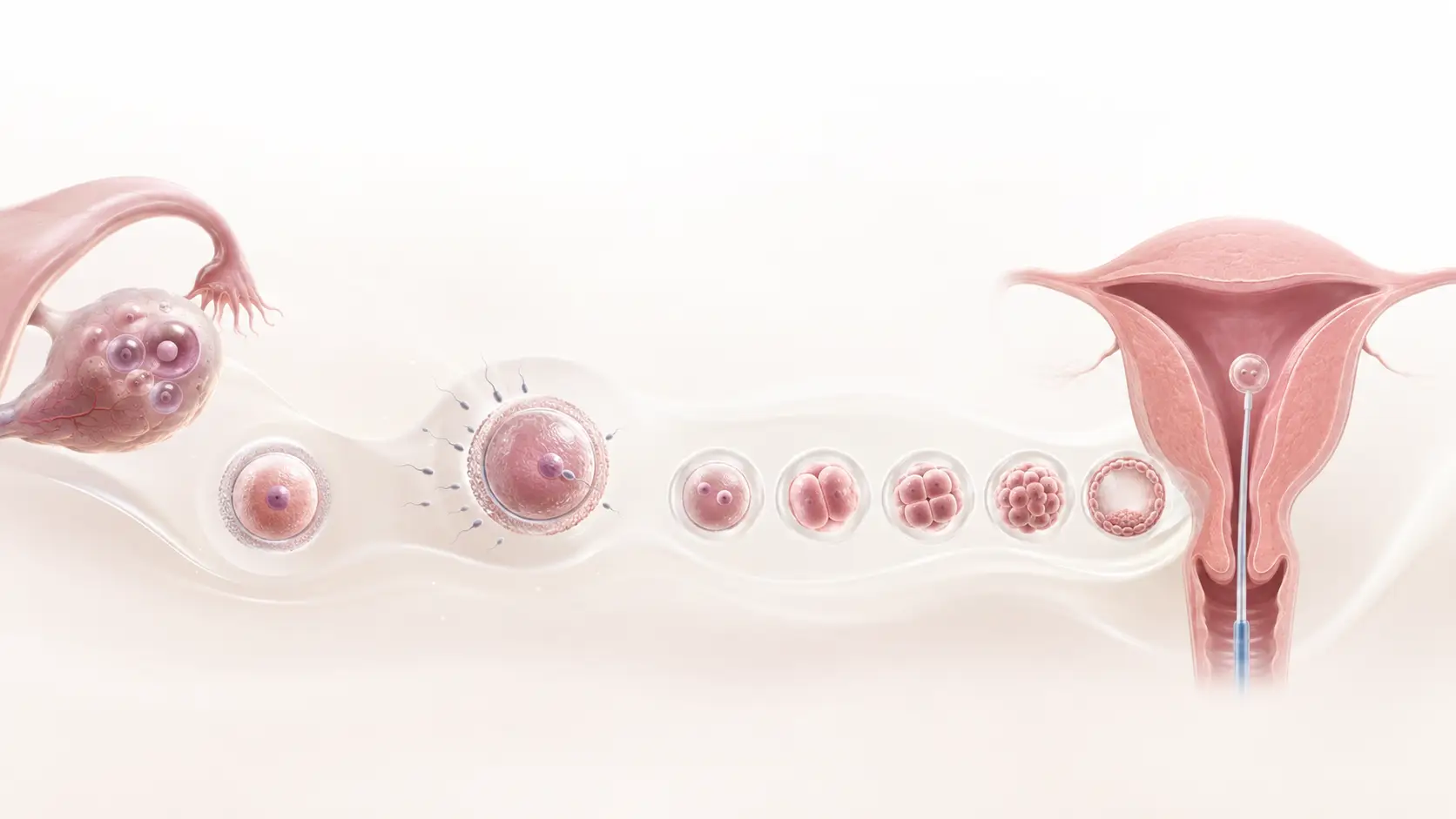
Intrauterine insemination, or IUI, is a fertility treatment in which a prepared sperm sample is placed directly into the uterus around the time of ovulation. Fertilisation, if it occurs, still takes place naturally within the reproductive tract.
An IUI cycle may follow natural ovulation or may involve medication and monitoring when clinically appropriate. The timing and treatment plan depend on the individual situation, and IUI does not guarantee fertilisation or pregnancy.
Who May Be Considered for IUI?
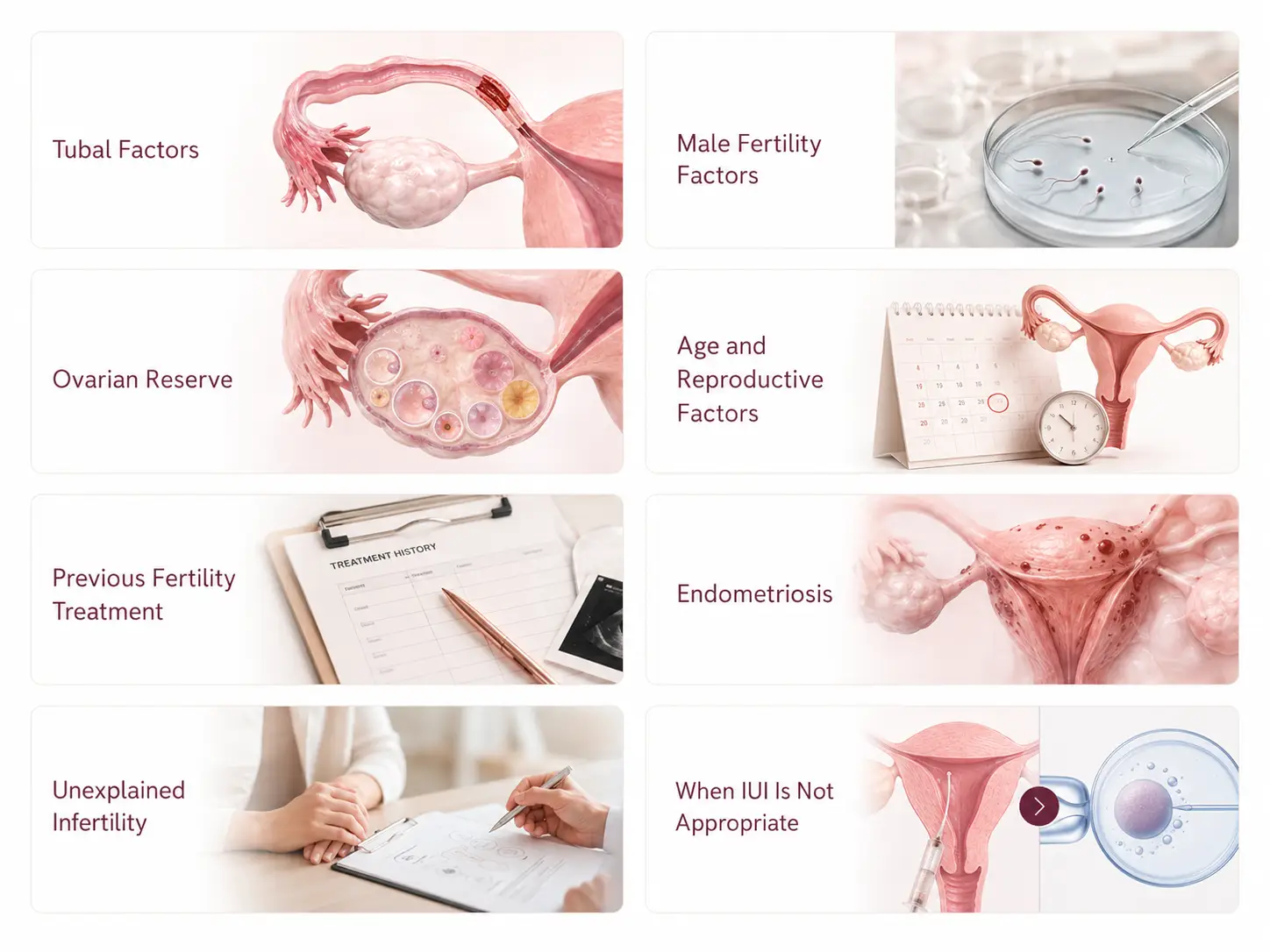
IUI may be considered in selected situations after fertility evaluation. Suitability depends on factors such as ovulation, tubal factors, semen findings, age, previous treatment and the overall clinical picture. The decision should be individualised rather than based on one test result alone.
01 — Selected Unexplained Infertility
In some cases where evaluation does not identify a clear cause, IUI may be one of the treatment options discussed.
02 — Ovulation-Related Factors
IUI may be considered when ovulation can be appropriately timed or supported as part of an individual treatment plan.
03 — Selected Mild Male Fertility Factors
04 — Suitable Tubal Factors
At least one fallopian tube generally needs to be considered suitable for natural fertilisation to remain possible after insemination.
05 — Timing or Ejaculatory Difficulties
IUI may sometimes be discussed when intercourse timing or ejaculation-related difficulties affect the chance of sperm reaching the reproductive tract.
06 — After Individual Clinical Review
IUI may also be considered in other selected situations when the doctor believes it is an appropriate option after reviewing the couple’s evaluation.
07 — Unexplained Infertility
When evaluation does not identify a clear cause, IVF may be one of several options discussed.
08 — When IUI Is Not Appropriate
If IUI is unlikely to be suitable because of specific fertility factors, IVF may be considered as another option.
Evaluation Before IUI
Before IUI is planned, the clinical team reviews the factors that may affect whether the treatment is appropriate and how the cycle should be managed. This can include ovulation, ultrasound findings, semen assessment, tubal factors, medical history and previous fertility treatment. Where relevant, both partners are considered before the treatment plan is finalised.
01 — Cycle & Ovulation Review
Menstrual history and ovulation are reviewed to understand cycle patterns and help plan appropriate timing.
02 — Ultrasound Assessment
Ultrasound may be advised to assess the ovaries, follicle development and other findings relevant to treatment planning.
03 — Semen Assessment
Semen findings are reviewed to understand whether IUI may be a reasonable treatment option in the individual situation.
04 — Tubal Factors
Tubal factors are considered because natural fertilisation after IUI depends on sperm and egg being able to meet within the reproductive tract.
05 — Medical & Medication History
Relevant medical conditions, current medicines and general health are reviewed before a treatment plan is recommended.
06 — Previous Treatment & Reports
Previous fertility investigations and treatment are reviewed where relevant so that earlier findings can inform the current plan.
07 — Treatment Planning & Counselling
The doctor discusses whether IUI is appropriate, whether monitoring or medication may be needed, what to expect and when another treatment pathway may be more suitable.
The IUI Process, Step by Step
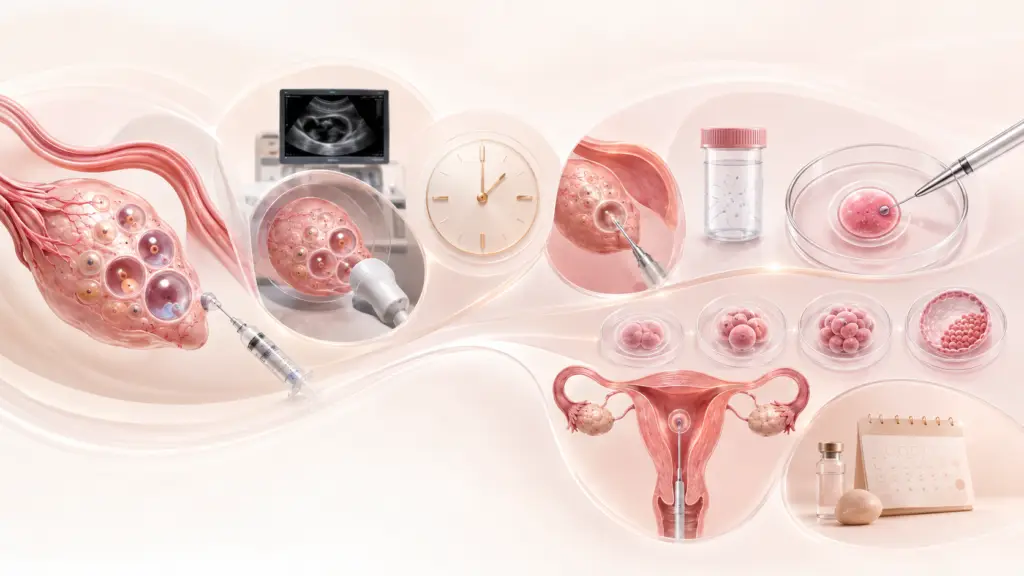
An IUI cycle is planned around ovulation and the individual treatment approach. Some cycles may follow natural ovulation, while medication and monitoring may be advised in selected situations. The exact sequence can vary, but the main stages generally include the following.
Treatment Planning
The doctor reviews the evaluation and confirms whether IUI is an appropriate treatment option for the cycle.
Cycle Approach
Depending on the individual situation, the cycle may follow natural ovulation or involve medication when clinically appropriate.
Ultrasound Monitoring
Ultrasound may be used to follow follicle development and help guide treatment timing.
Ovulation Timing
Ovulation is tracked, and additional timing measures may be advised where appropriate to the treatment plan.
Semen Sample
A semen sample is provided according to the clinic’s instructions, or another approved arrangement is discussed when required.
Sperm Preparation
The laboratory prepares the sample so that suitable motile sperm can be used for insemination.
Insemination Procedure
The prepared sperm sample is placed into the uterus through a thin catheter around the planned time of ovulation.
Short Recovery
After the procedure, brief observation or rest may be advised before the patient leaves the clinic.
Post-Procedure Guidance
The clinical team explains prescribed medication, activity guidance and what to expect after the procedure.
Pregnancy Test & Follow-up
The clinic advises when pregnancy testing should be performed and discusses the next step based on the result and overall treatment history.
Monitoring, Timing and Sperm Preparation
The way an IUI cycle is monitored depends on the individual treatment plan. Some cycles may follow natural ovulation, while medication may be used in selected situations. Ultrasound and other assessments may be advised to help understand follicle development and plan the timing of insemination.
Before insemination, the semen sample is prepared in the laboratory so that suitable motile sperm can be used for the procedure. Monitoring findings may sometimes lead the doctor to adjust the plan, change the timing or reconsider whether the cycle should proceed.

What to Expect During IUI Treatment
An IUI procedure is usually brief, but the experience around it can vary depending on the treatment plan, monitoring and whether medication is being used. The clinical team will explain the timing, procedure and follow-up instructions for the individual cycle.
Before the Procedure
The team confirms the treatment timing and any instructions related to the semen sample, medication or monitoring.
During Insemination
Prepared sperm is placed into the uterus through a thin catheter around the planned time of ovulation.
Comfort During IUI
Some patients may experience mild discomfort or short-lived cramping during or after the procedure. Experiences can vary between individuals.
After the Procedure
A short period of rest may be advised before leaving the clinic. The team will provide individual guidance about activity and any prescribed medication.
Pregnancy Testing
The clinic will advise when pregnancy testing should be performed rather than relying on very early testing or symptoms alone.
Follow-up and Reassessment
If pregnancy does not occur, the doctor can review the cycle and overall fertility findings before discussing whether another IUI cycle or a different treatment option should be considered.
IUI Has Limits, and That Matters
IUI can be an appropriate option for selected patients, but it is not suitable for every fertility concern and it cannot guarantee fertilisation or pregnancy. The treatment plan should reflect the findings from evaluation, the response during the cycle and the wider clinical situation.
01 — Suitability Comes First
If tubal, sperm, ovulation or other fertility factors make natural fertilisation less likely, the doctor may recommend discussing a different treatment pathway rather than proceeding with IUI.
02 — Monitoring Can Change the Plan
When fertility medication is used, monitoring helps assess the ovarian response. If too many follicles develop or the response is not appropriate, the treatment plan may need to be adjusted or the cycle may need to be stopped.
03 — Risks and Outcomes Are Discussed Clearly
Temporary cramping or spotting can occur after IUI, and infection is uncommon. When fertility medication is used, risks can also include multiple pregnancy, ectopic pregnancy and ovarian hyperstimulation. Your doctor will explain the risks relevant to your individual plan.
Our Approach to IUI at Khushi
IUI is considered as one possible fertility treatment, not as an automatic next step. Our approach is to understand the clinical situation first, explain why IUI may or may not be appropriate, and plan the cycle around the individual findings.
01 — Evidence Before Assumption
Treatment planning begins with fertility evaluation rather than assuming that IUI is the right option.
02 — Individualised Cycle Planning
Natural-cycle monitoring, medication and treatment timing are considered according to the individual clinical situation.
03 — Both Partners Considered
Where relevant, findings from both partners are reviewed so that treatment decisions reflect the wider fertility picture.
04 — Clear Expectations
The doctor explains what IUI involves, its limitations and what patients can reasonably expect from the treatment process.
05 — Transparent Communication
Monitoring findings, changes to the plan and alternative treatment options are discussed clearly throughout the cycle.
06 — Review Before Repeating Treatment
If an IUI cycle is unsuccessful, the overall situation can be reviewed before deciding whether another cycle or a different treatment pathway is more appropriate.
IUI and Other Fertility Pathways
IUI is one possible treatment pathway, and it is not interchangeable with IVF or other fertility treatments. The most appropriate option depends on the findings from evaluation, previous treatment and the individual clinical situation.
01 — Fertility Evaluation
Understand the investigations and clinical review that help determine whether IUI or another treatment may be appropriate.
02 — IUI and IVF: Different Pathways
IUI places prepared sperm into the uterus around ovulation, while IVF involves fertilisation in the laboratory. Your doctor can explain which approach may be more appropriate after evaluation.
03 — Male Fertility
Semen findings can influence whether IUI is suitable and whether another fertility pathway should be discussed.
04 — PCOS & Ovulation
Ovulation-related factors may affect treatment planning, monitoring and whether IUI is considered.
05 — Low AMH & Ovarian Reserve
Ovarian reserve is considered together with age, ultrasound findings, history and other fertility factors when planning treatment.
06 — Patient Journey
Learn what to expect from consultation, evaluation, treatment planning and follow-up at Khushi.
Patient Journey
IVF Treatment FAQs
These are some common questions patients ask when considering IVF. The answers provide general information. Your doctor can explain what applies to your individual situation after evaluation.
What is IUI?
IUI, or intrauterine insemination, is a fertility treatment in which a prepared sperm sample is placed directly into the uterus around the time of ovulation. Fertilisation, if it occurs, takes place naturally within the reproductive tract.
How is the timing of IUI decided?
The timing depends on the individual treatment plan and ovulation. Ultrasound monitoring, ovulation tracking or other measures may be used when clinically appropriate to help plan insemination.
Does every IUI cycle require fertility medication?
No. Some IUI cycles may follow natural ovulation, while medication may be recommended in selected situations. The approach depends on the fertility evaluation and individual treatment plan.
Is IUI painful?
IUI is usually a brief clinic procedure. Some patients may experience temporary discomfort or mild cramping during or shortly after insemination, although individual experiences can vary.
How is IUI different from IVF?
With IUI, prepared sperm is placed into the uterus and fertilisation, if it occurs, happens within the reproductive tract. With IVF, eggs are collected and fertilisation takes place in the laboratory before an embryo may later be transferred into the uterus.
What happens if an IUI cycle does not result in pregnancy?
An unsuccessful cycle does not automatically mean the same treatment should simply be repeated. The doctor can review the cycle, fertility findings, age, treatment history and other relevant factors before discussing whether another IUI cycle or a different treatment pathway may be appropriate.
Understand Whether IUI Is Right for You
If you are considering IUI, a consultation can help clarify whether it is appropriate for your situation. Your fertility evaluation, medical history and previous treatment, where relevant, can be reviewed before the available options and next steps are discussed.