
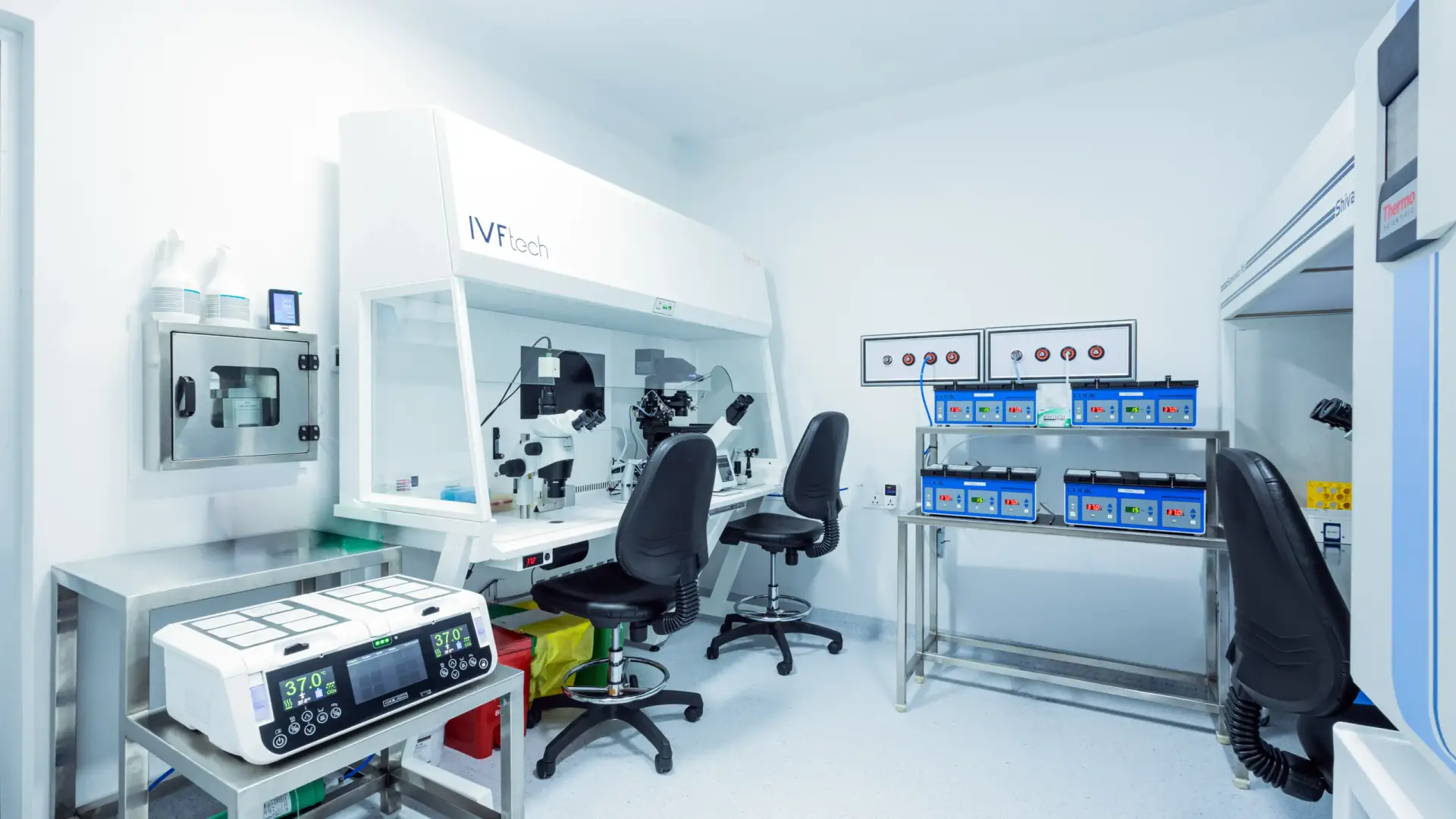
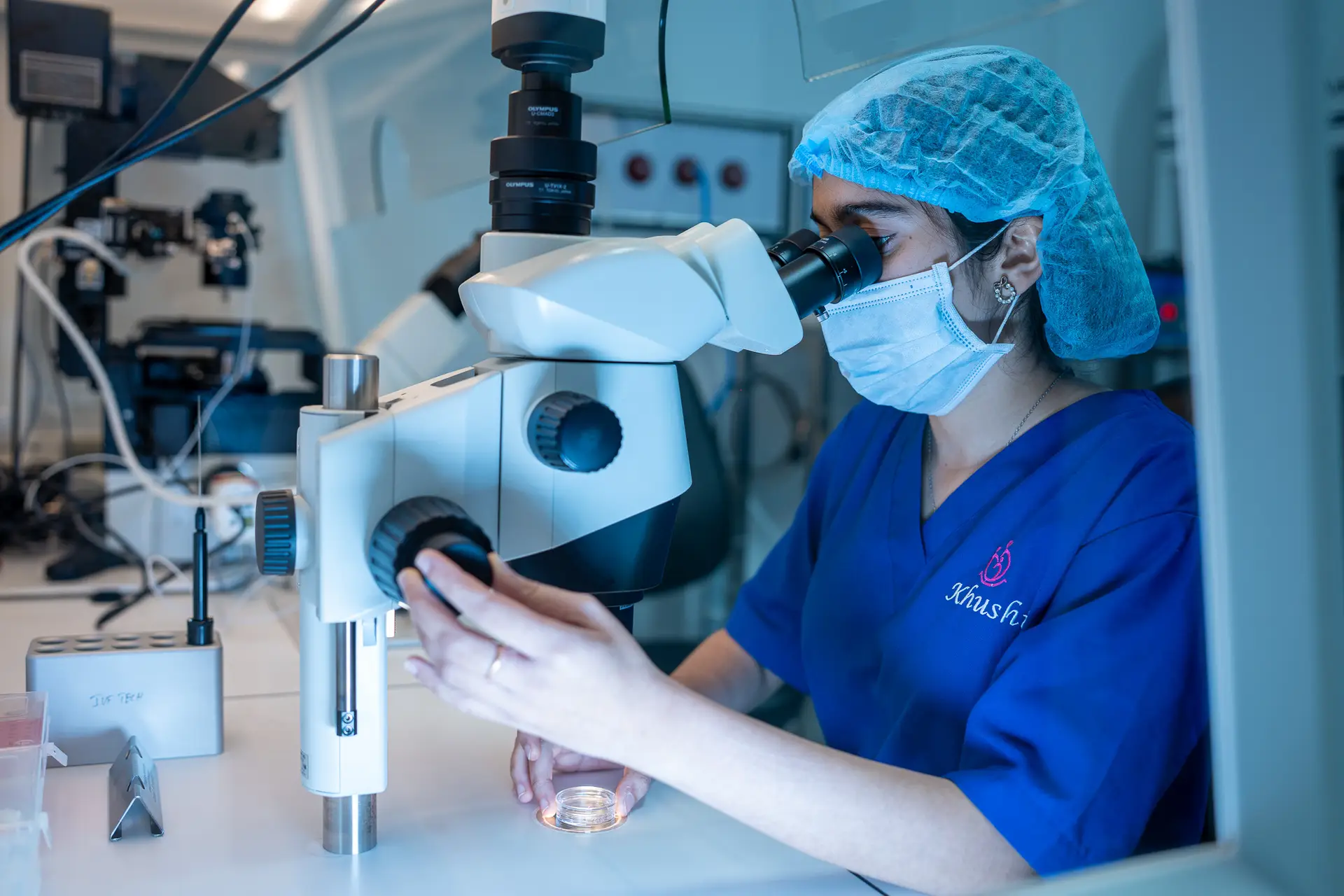
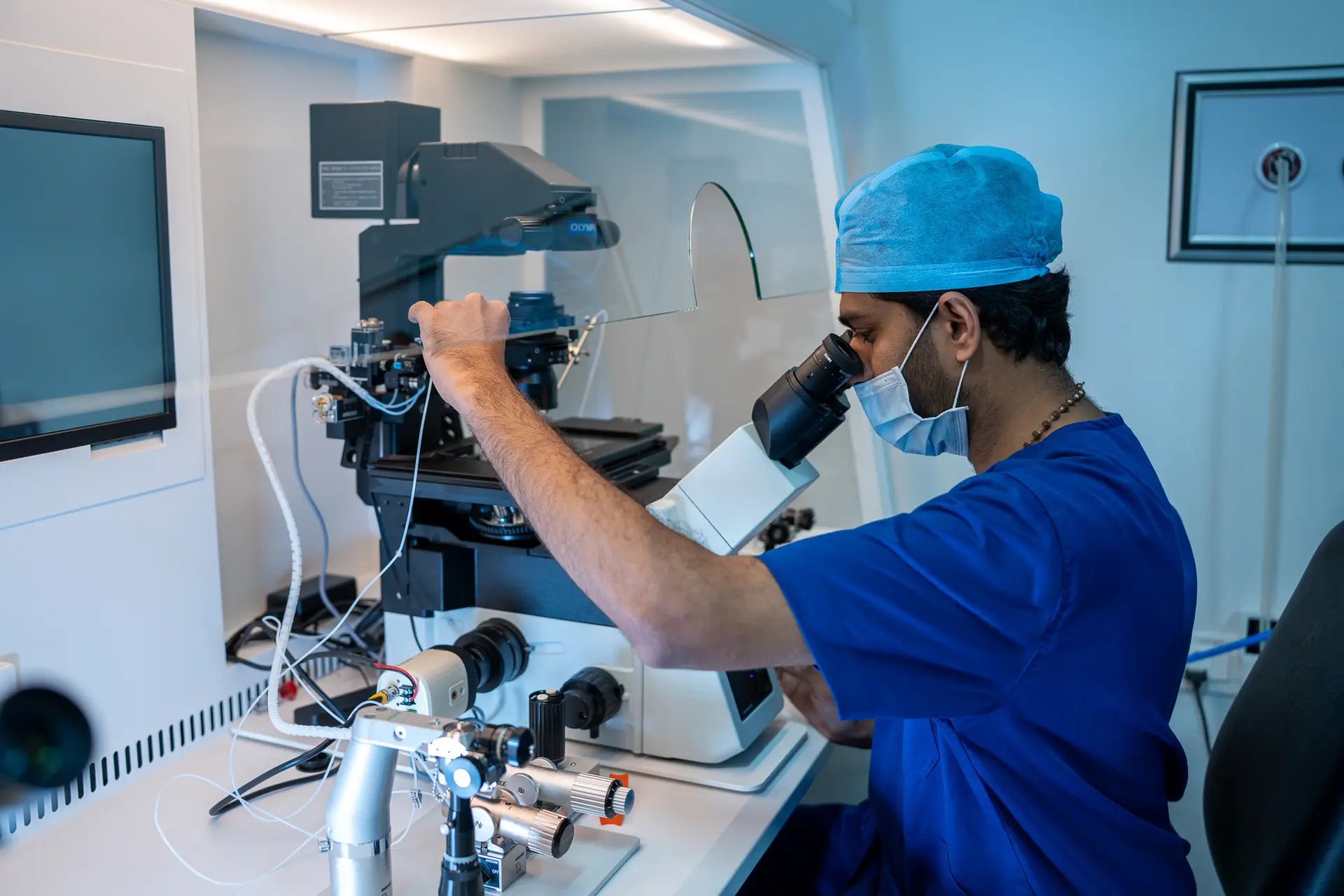
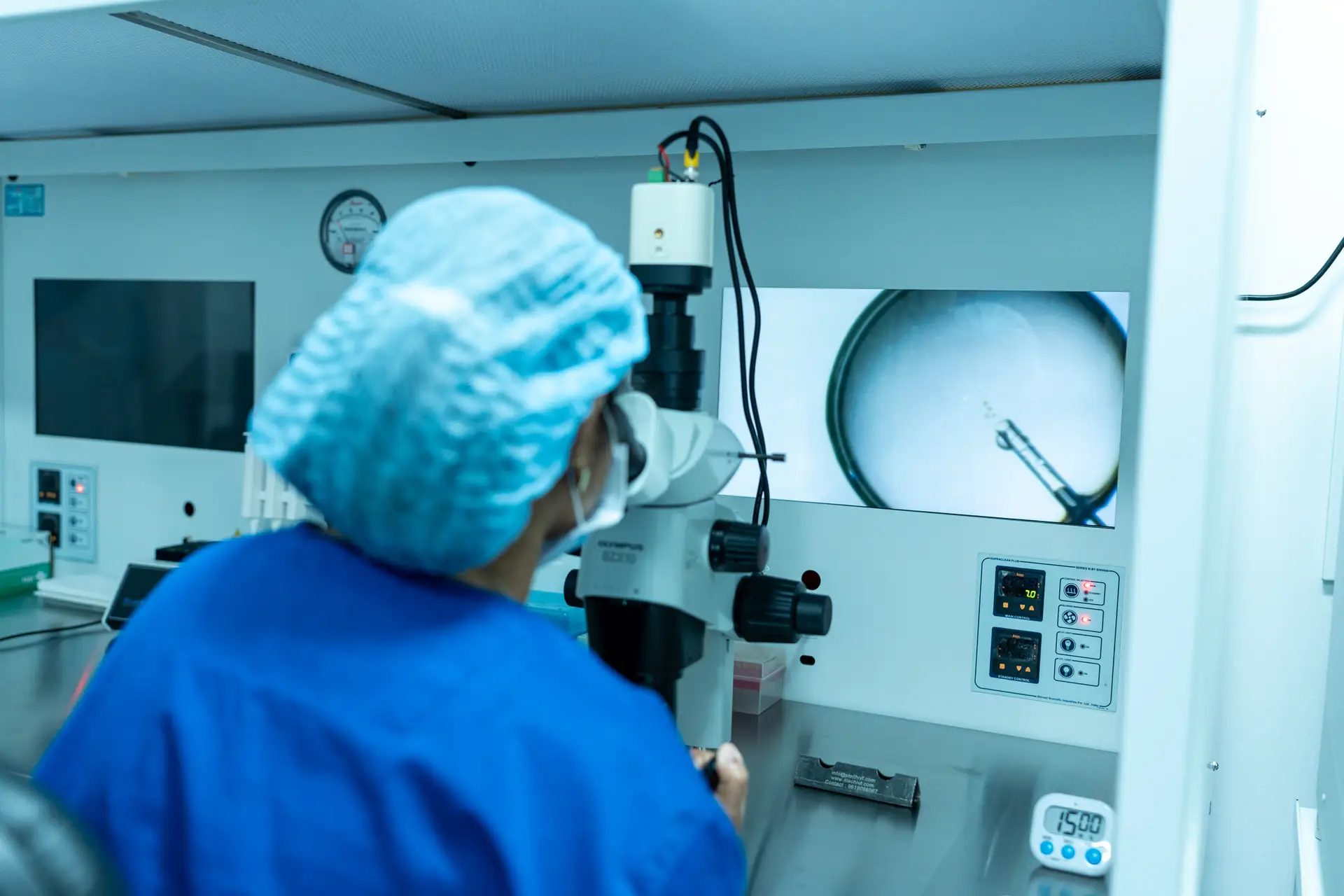

Inside Khushi’s embryology laboratory, science, observation and coordinated care come together throughout the IVF process.
Careful observation, handling and coordinated embryology workflows support the IVF journey from fertilisation onward.
Laboratory systems provide important information, while experienced embryology judgement remains central throughout the process.
Embryology Expertise
Specialist laboratory care throughout the IVF journey
Controlled Laboratory Environment
Careful handling, observation and coordinated workflows
Clinical + Laboratory Coordination
Connected decision-making across treatment and embryology
After eggs are collected, a significant part of the IVF process takes place inside the embryology laboratory where fertilisation, embryo culture, observation and laboratory handling are carefully coordinated.
The laboratory does not work separately from clinical care. Embryologists and fertility specialists coordinate across the treatment pathway so that laboratory observations can be considered alongside the individual clinical plan.
The embryology laboratory connects the clinical procedures before and after embryo development.
After egg retrieval, the embryology laboratory becomes the setting for several important stages of IVF from identifying collected eggs to fertilisation, embryo culture, observation and preparation for the next clinical decision.
Collected eggs are identified and assessed within the laboratory before the next stage of treatment.
Eggs and prepared sperm are brought together using the fertilisation approach selected for the individual treatment plan.
Following fertilisation, developing embryos are maintained within the laboratory environment as development progresses.
Embryologists observe developmental progress and record relevant laboratory findings during embryo culture.
Laboratory observations are considered alongside the clinical plan when preparing for embryo transfer, continued culture or cryopreservation where appropriate.
Embryology assessment combines careful observation with the wider clinical context.
During embryo culture, embryologists assess developing embryos at different stages. Assessment considers features such as developmental stage, appearance and progression over time, helping the laboratory team describe how an embryo is developing.
Embryologists consider the stage an embryo has reached during the period of laboratory culture.
The appearance and structural features of the developing embryo form part of laboratory assessment.
Assessment is considered across the course of development rather than relying on a single observation alone.
Where clinically appropriate, embryos may be cryopreserved for future use. The process involves careful laboratory handling, identification, documentation and storage as part of the wider treatment plan.
Preparation for cryopreservation is carried out within coordinated laboratory workflows.
Clear identification and documentation remain important throughout laboratory handling and storage.
Cryopreservation may form part of future treatment planning where clinically appropriate.
Embryology laboratory work involves multiple stages of handling, observation and documentation. Clear identification and traceability help maintain continuity as material moves through different laboratory steps.
The aim is consistent laboratory handling with clear documentation at every relevant stage.
Clear identification remains important as eggs, sperm and embryos move through relevant laboratory stages.
Relevant laboratory observations and handling steps are documented as part of the treatment record.
Traceability supports continuity across laboratory processes and links laboratory handling with the wider treatment pathway.
Laboratory information is considered alongside the clinical plan when preparing for the next appropriate step.
Behind every laboratory environment is a team of professionals bringing focus, responsibility and shared attention to their work. At Khushi Fertility, our embryology team works closely within the wider fertility care team while maintaining a clear focus on laboratory responsibilities.
A strong laboratory team depends on clear roles, professional responsibility and consistent communication within the wider fertility care environment.
Embryology can feel highly technical. These answers explain some of the laboratory concepts patients commonly ask about during IVF treatment.
No. Embryo assessment provides information about development and appearance in the laboratory, but it cannot guarantee implantation or pregnancy. Treatment decisions consider laboratory findings together with the wider clinical picture.
Embryos may progress at different rates during laboratory culture. Embryologists assess each developing embryo individually over the appropriate observation period.
Embryo grading is a laboratory assessment of characteristics such as developmental stage and appearance. It helps describe what embryologists observe during culture and forms one part of treatment planning
Not necessarily. Suitability for cryopreservation depends on laboratory assessment, developmental progress and the individual treatment plan.
Embryology findings are considered together with clinical factors when planning embryo transfer. The approach is individualised for each treatment cycle.
Cryopreserved embryos are stored within the laboratory storage system for potential future use according to the treatment plan, applicable consent requirements and clinical guidance.
If you are considering IVF or would like to understand how laboratory care forms part of your treatment journey, our fertility team can guide you through the next appropriate steps.
Main Centre
No. 05/A, Sarakki Industrial Layout, Opposite Vega City Mall, Bannerghatta Road, JP Nagar 3rd Phase, Bangalore – 560078
Coming Soon
A new Khushi Fertility & IVF Centre location in Bangalore.
For appointments and patient enquiries, call either of the numbers below.